Category: Coding Careers

  • Why Developers are Learning Systems Thinking Instead of More Frameworks

    Why Developers are Learning Systems Thinking Instead of More Frameworks

    I started noticing a pattern while talking to developers who had been in the industry for several years. The conversations weren’t centered on the newest JavaScript library or the latest backend framework anymore. Instead, they kept coming back to architecture, scalability, and understanding how software behaves as a complete system. That shift caught my attention because it felt very different from the endless framework discussions that dominated only a few years ago.

    I also realized that the developers growing fastest weren’t necessarily the ones learning every new tool. They were the ones asking better questions. Why did the system fail? Where did the bottleneck come from? How would one change affect every other service? Those questions point toward systems thinking, and they’re becoming far more valuable than memorizing another framework’s syntax.

    Framework Fatigue Is Becoming a Real Challenge

    Framework Fatigue Is Becoming a Real Challenge

    For years, developers felt pressured to stay ahead by learning every framework that appeared. React led to Next.js, Angular evolved, Vue changed, backend frameworks multiplied, and new runtimes arrived almost every year. Keeping up became part of the job.

    The problem is that frameworks have relatively short life cycles. They evolve rapidly, introduce breaking changes, or eventually lose momentum. Investing months learning every detail often delivers only short-term benefits before another popular alternative appears.

    This constant cycle creates framework fatigue. Developers spend more time remembering APIs, configuration files, and project structures than improving the skills that actually make software reliable.

    As AI coding assistants become increasingly capable of generating framework-specific code, the value of memorizing syntax continues to decline. Understanding why the software works matters much more than remembering exactly how to configure another library.

    Systems Thinking Solves Problems at Their Source

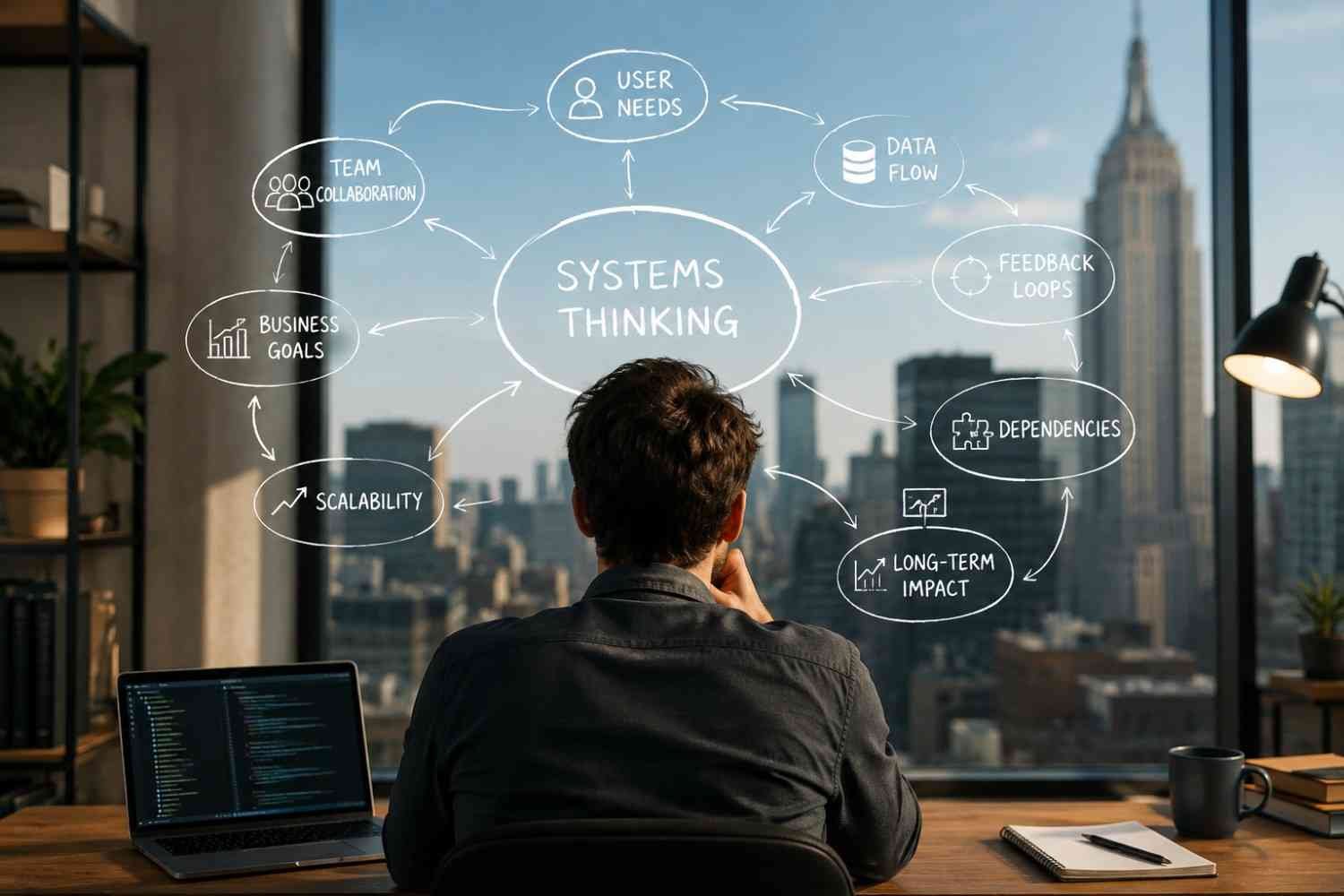
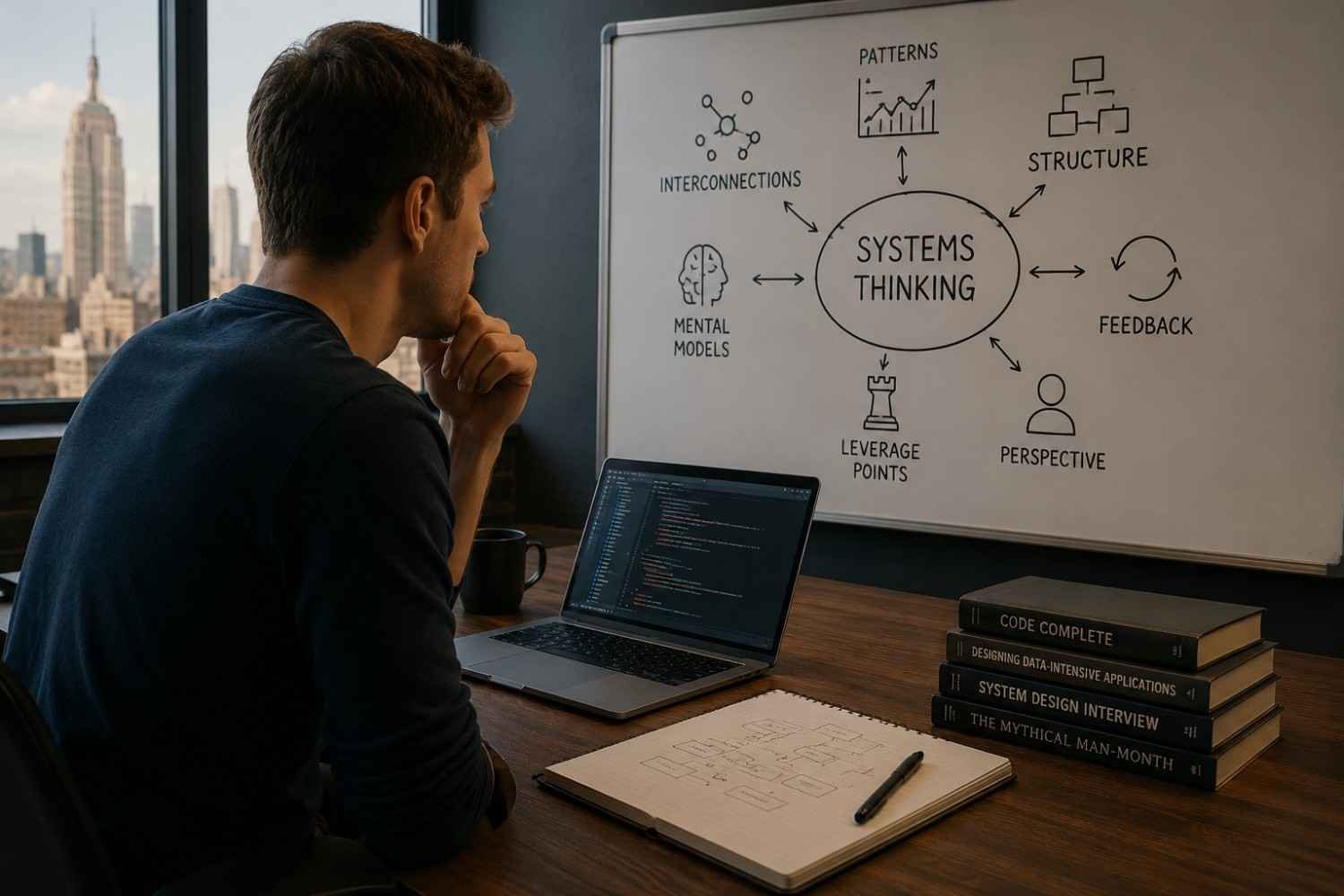
    Systems thinking looks beyond individual pieces of code and focuses on how every component interacts.

    Instead of asking why a single API failed, a systems thinker investigates how services communicate, how data flows between them, and whether the overall architecture introduced the problem in the first place.

    That mindset helps developers solve root causes instead of repeatedly fixing symptoms.

    Imagine an online store where checkout requests suddenly slow down. A framework-focused approach might optimize a controller or rewrite a component. A systems thinker examines database queries, caching, network latency, message queues, external APIs, and infrastructure before deciding where the actual bottleneck exists.

    The solution often has very little to do with the framework itself.

    Why These Skills Last Longer Than Any Framework
    Why These Skills Last Longer Than Any Framework

    Programming languages and frameworks will continue to evolve. The principles behind scalable software rarely do.

    Understanding concepts such as loose coupling, abstraction, observability, feedback loops, reliability, and maintainability allows developers to adapt regardless of the technology stack.

    Whether a company uses AWS or Azure, Go or Rust, Kubernetes or traditional servers, systems thinking provides a foundation that transfers across environments.

    Instead of becoming an expert in one tool, developers become effective at solving complex engineering problems.

    That’s a skill employers continue to value because technology changes much faster than good engineering judgment.

    The Shift Happening Across Modern Development

    Today’s software teams increasingly expect engineers to understand the entire lifecycle of an application rather than focusing only on writing code.

    Developers are shifting their attention in several important ways:

    • From writing components to designing scalable systems that handle growth gracefully.
    • From isolated coding tasks to understanding how microservices, databases, APIs, and infrastructure influence one another.
    • From producing more code to creating software that’s easier to maintain, monitor, and improve over time.

    These changes reflect a broader industry move toward engineering decisions that create long-term stability instead of short-term productivity.

    AI Is Accelerating This Change

    AI Is Accelerating This Change

    Artificial intelligence isn’t replacing software engineers, but it is changing what makes an engineer valuable.

    Many coding assistants can already generate boilerplate code, create API endpoints, write unit tests, and translate code between frameworks within seconds.

    Those capabilities reduce the competitive advantage of simply knowing another framework.

    What AI still struggles with is evaluating architectural trade-offs, balancing performance with maintainability, identifying hidden dependencies, and understanding business context.

    Those responsibilities require systems thinking.

    Developers who understand how software behaves at scale can use AI as a productivity tool while continuing to provide the engineering judgment that organizations rely on.

    That’s one reason discussions around how AI is reshaping software engineering careers increasingly focus on decision-making rather than coding speed.

    How Developers Can Build Systems Thinking

    Building systems thinking doesn’t require abandoning programming or learning an entirely new discipline. It starts with becoming more curious about how software behaves outside your editor.

    Spend time reading system design case studies instead of only framework documentation. Trace how requests travel through an application. Learn how databases, caching layers, queues, authentication services, and cloud infrastructure interact.

    Participating in architecture discussions, reviewing production incidents, and performing root cause analysis also strengthens this mindset. Every outage becomes an opportunity to understand why the system behaved the way it did instead of simply fixing the visible bug.

    Over time, these experiences create mental models that remain useful regardless of which programming language or framework becomes popular next.

    Why This Shift Will Continue

    Why This Shift Will Continue

    Frameworks will always have a place because they help developers build software faster. But they’re becoming easier to learn, easier to replace, and increasingly supported by AI-powered tools.

    Systems thinking fills the gap that automation cannot easily replace. It helps engineers design resilient applications, communicate across teams, evaluate technical trade-offs, and make decisions that improve software long after the first version ships.

    Developers who invest in these skills aren’t ignoring new technologies. They’re building the foundation that allows them to learn any technology faster while making better engineering decisions throughout their careers.

    FAQs: Why Developers Are Learning Systems Thinking Instead of More Frameworks

    1. What is systems thinking in software engineering?

    Systems thinking is the practice of understanding how different parts of an application interact instead of focusing only on individual components or code.

    2. Why are developers moving away from learning more frameworks?

    Frameworks change quickly, while systems thinking provides long-term skills that apply across technologies and help solve larger engineering challenges.

    3. Does systems thinking replace learning frameworks?

    No. Developers still need frameworks, but understanding architecture and system behavior creates a stronger foundation for using them effectively.

    4. Is systems thinking important for junior developers?

    Yes. Developing this mindset early improves debugging, collaboration, and problem-solving while preparing developers for senior engineering responsibilities.

    Why Strong Foundations Outlast Popular Tools

    Technology will continue to evolve, and new frameworks will keep appearing. The developers who thrive won’t be the ones chasing every trend. They’ll be the ones who understand how software behaves as a complete system, make thoughtful architectural decisions, and solve problems that extend beyond individual lines of code. Those abilities remain valuable no matter how the technology landscape changes.

    Frameworks help you build software. Systems thinking helps you build software that lasts.
  • Continuous Learning for Programmers: Small Habits That Lead to Big Career Growth

    Continuous Learning for Programmers: Small Habits That Lead to Big Career Growth

    I started noticing something early in my programming journey. The developers who seemed to grow the fastest weren’t always the ones working the longest hours or collecting the most certifications. They were simply learning something new on a regular basis, even if it was only for a few minutes each day.

    I also realized that trying to master every new language, framework, or tool was exhausting. The biggest difference came when I stopped chasing every trend and focused on building a learning habit that fit naturally into my routine. That small shift made learning feel sustainable instead of stressful.

    Why Learning Never Stops in Software Development

    Why Learning Never Stops in Software Development

    Software development evolves at an incredible pace. New frameworks appear, AI tools reshape workflows, cloud platforms introduce new services, and security practices continue to improve. While technologies change, the ability to keep learning remains one of the most valuable skills a programmer can develop.

    Continuous learning is less about staying ahead of every trend and more about staying adaptable. Developers who build consistent learning habits are better prepared to solve unfamiliar problems, understand modern development practices, and confidently adopt new tools when they genuinely add value.

    The goal isn’t to know everything. It’s to remain curious enough that your skills never become outdated.

    Build a Learning Habit Instead of Waiting for Motivation

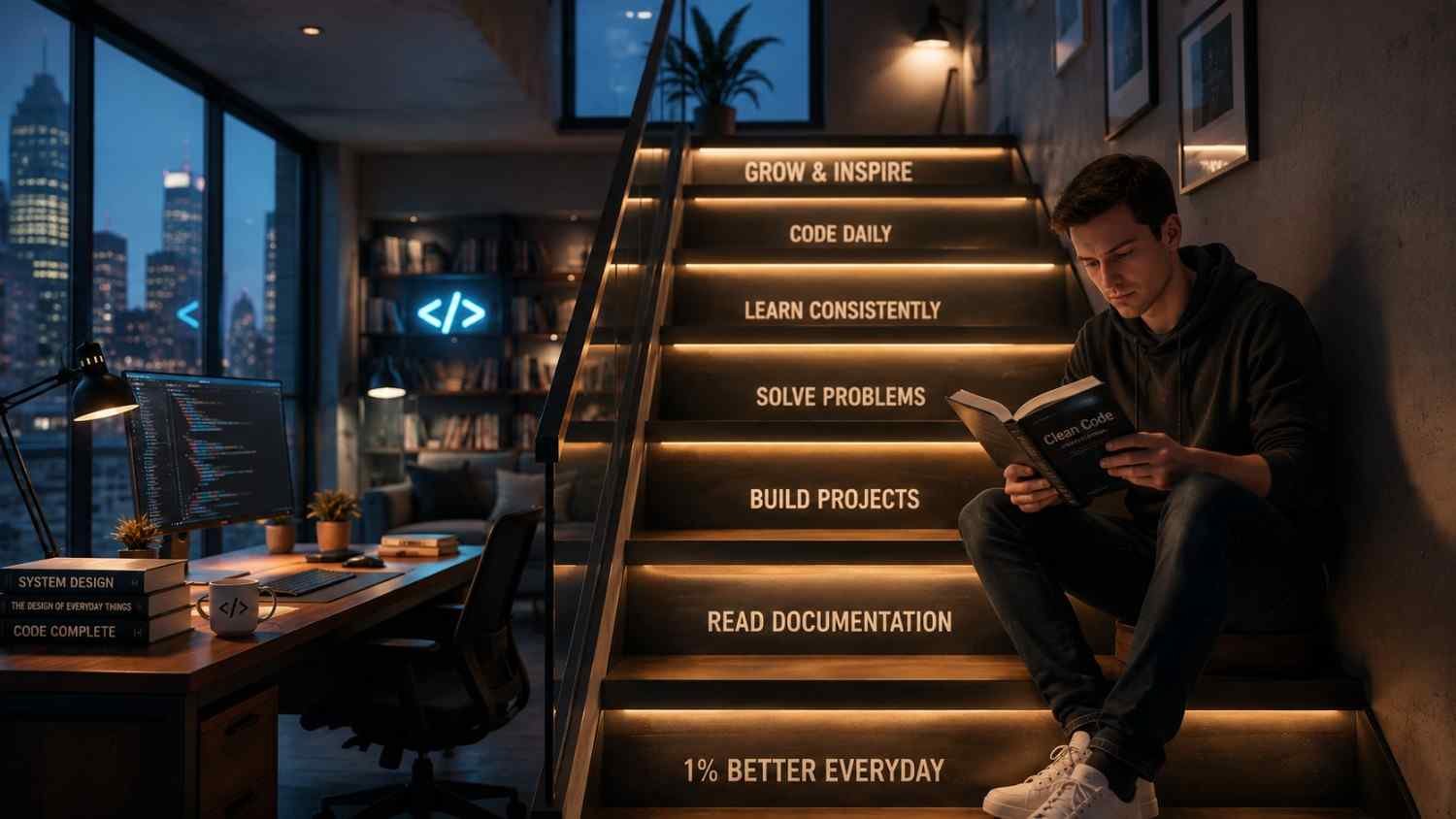
    One of the easiest ways to make learning stick is by following the 15-minute rule. Spending just 15 focused minutes each day often produces better long-term results than trying to squeeze five-hour study sessions into busy weekends.

    Small habits also fit naturally into everyday life. Reading a technical blog during your morning coffee, listening to a programming podcast while commuting, or watching a short conference talk during lunch can gradually expand your knowledge without disrupting your schedule.

    Another helpful habit is maintaining a simple learning backlog. Keep a running list of articles, documentation, GitHub repositories, or tools you want to explore. When you have free time, you can immediately start learning instead of wasting those minutes deciding what deserves your attention.

    Learn Through the Work You’re Already Doing

    Learn Through the Work You're Already Doing

    Some of the best learning opportunities happen during your regular workday.

    Instead of treating frameworks as black boxes, explore how they work. When using an open-source library, click “Go to Definition” and examine the underlying implementation. Even reading a few well-written functions can introduce cleaner coding techniques and architectural ideas.

    Code reviews are another powerful classroom. Rather than focusing only on comments related to your own tasks, study pull requests created by experienced developers. Notice how they structure files, simplify logic, and explain technical decisions.

    You can also improve by optimizing one small thing every day. Refactor a function that’s difficult to read, strengthen an integration test, or simplify repetitive code. These small improvements sharpen problem-solving skills while making the codebase healthier for everyone.

    Build a Personal Knowledge Base That Grows With You

    Learning becomes far more valuable when you capture what you’ve learned.

    Document complex bugs, terminal commands, deployment issues, and debugging techniques in a personal knowledge base using tools like Notion, Obsidian, or even simple Markdown files. Revisiting your own notes is often faster than searching the internet for the same answer months later.

    Another effective practice is maintaining a “Today I Learned” repository on GitHub. Adding one useful insight each day creates a searchable history of your growth while encouraging consistency.

    Writing also reinforces understanding. Publishing short technical notes, documenting project decisions, or explaining a concept in your own words forces you to organize your thoughts clearly. Teaching others is often the moment when knowledge truly sticks.

    Choose Projects That Stretch Your Skills

    Choose Projects That Stretch Your Skills

    Many developers overload themselves by trying to learn several new technologies in one side project. A more practical approach is changing only one variable at a time.

    If you’re comfortable with React, experiment with a new backend framework. If you’re familiar with SQL databases, explore a document database. Focusing on one unfamiliar technology keeps projects manageable while creating meaningful learning opportunities.

    Open-source contributions also provide valuable experience. You don’t have to solve advanced issues immediately. Improving documentation, fixing small bugs, or contributing tests helps you understand large codebases and collaborative development practices.

    These experiences become even more valuable for developers considering a freelance software developer career, where adapting to different projects, clients, and technology stacks is part of everyday work.

    Common Mistakes That Slow Your Growth

    Continuous learning becomes difficult when every new technology feels urgent.

    Some programmers spend more time collecting courses than completing projects. Others jump between tutorials without applying what they’ve learned. Information overload can create the illusion of progress while leaving practical skills unchanged.

    Another common mistake is ignoring the fundamentals. Clean code, debugging, algorithms, system design, version control, and software architecture continue to matter regardless of which framework is trending. Strong foundations make learning future technologies much easier.

    AI has also changed how developers learn. Using AI assistants for explanations, debugging, and brainstorming can accelerate learning, but relying on generated code without understanding it limits long-term growth. The best developers use AI as a learning partner rather than a replacement for critical thinking.

    Why Small Learning Habits Create Big Career Growth

    Why Small Learning Habits Create Big Career Growth

    Career growth rarely comes from one breakthrough moment. It comes from hundreds of small improvements that gradually compound over months and years. Every article you read, bug you solve, code review you study, and project you complete adds another layer to your experience.

    Technology will continue changing, but the habit of learning consistently will always remain valuable. When learning becomes part of your routine instead of something you do only when necessary, you’re far more likely to stay confident, adaptable, and ready for whatever comes next.

    FAQs: Continuous Learning for Programmers: Small Habits That Lead to Big Career Growth

    1. How much time should programmers spend learning every day?

    Even 15 to 30 focused minutes daily can produce meaningful long-term results when practiced consistently.

    2. Should I learn every new programming language?

    No. Strengthen your fundamentals first and choose new technologies based on your career goals or current projects.

    3. Is contributing to open source worth it?

    Yes. Even small contributions improve collaboration skills, expose you to larger codebases, and strengthen your portfolio.

    4. Can AI replace continuous learning for programmers?

    No. AI can speed up learning and problem-solving, but understanding concepts yourself is essential for writing reliable, maintainable software.

    Why Consistency Always Outlasts Intensity

    The developers who build lasting careers aren’t usually the ones chasing every new trend. They’re the ones who remain curious, keep refining their skills, and make learning part of their everyday routine. Small improvements may seem insignificant in the moment, but they compound into stronger technical knowledge, better decision-making, and greater confidence over time.

    The habit of learning never becomes obsolete, even when the technologies do.

  • Freelance Software Developer Career Tips for Landing Better Clients

    Freelance Software Developer Career Tips for Landing Better Clients

    I used to think becoming a successful freelance developer was mostly about writing clean code and staying up to date with new frameworks. After watching talented developers struggle to find consistent work while others stayed booked for months, I realized technical skills were only part of the equation.

    The biggest lesson I noticed was that clients rarely searched for someone who simply knew a programming language. They wanted someone who could solve a business problem with confidence, communicate clearly, and deliver reliable results. Once that perspective changes, building a freelance career starts to feel much more intentional.

    Why Great Developers Still Struggle to Find Clients

    Why Great Developers Still Struggle to Find Clients

    Many freelancers assume better coding skills automatically lead to better clients. While technical expertise matters, businesses usually make hiring decisions based on trust, communication, and the value they expect to receive.

    A client isn’t searching for someone who knows React, Python, or Laravel. They’re searching for someone who can launch a product faster, improve an outdated system, automate repetitive work, or create software that helps generate revenue.

    That’s why positioning yourself as a business partner instead of just another programmer immediately makes you stand out. Clients remember outcomes far more than technical jargon.

    Position Yourself as a Specialist, Not a Generalist

    One of the fastest ways to improve your freelance software developer career is by narrowing your focus.

    Instead of introducing yourself as a software developer who builds everything, become known for solving a specific type of problem. You might specialize in SaaS dashboards, AI-powered applications, eCommerce platforms, API integrations, or cloud migrations.

    Specialists often attract businesses looking for proven expertise instead of experimenting with someone who claims to do it all.

    Your website, LinkedIn profile, GitHub, and portfolio should consistently communicate that specialty. The clearer your positioning, the easier it becomes for potential clients to understand why they should hire you.

    Build a Portfolio That Shows Results

    Build a Portfolio That Shows Results

    Many developer portfolios list technologies without explaining what those technologies accomplished.

    A stronger portfolio tells a story.

    Instead of writing “Built a Next.js application,” explain the client’s challenge, describe your technical solution, and share the measurable outcome. Maybe page load times improved, customer support requests dropped, or online sales increased after the project launched.

    Aim for five to seven high-quality case studies rather than dozens of unfinished side projects.

    If your best client work is protected by non-disclosure agreements, don’t let that stop you from demonstrating expertise. Publish technical articles, contribute to open-source projects, build practical developer tools, or create tutorials that showcase your problem-solving process.

    Consistent public work builds credibility even when client projects remain private.

    Stop Selling Hours and Start Selling Outcomes

    One mistake many new freelancers make is competing on price.

    Low hourly rates may attract more inquiries, but they often bring clients who focus only on cost instead of quality. Businesses with realistic budgets usually evaluate experience, communication, and confidence before comparing rates.

    Instead of saying you charge a certain amount per hour, explain what the client gains from working with you. Perhaps your solution reduces manual work, shortens development time, improves application performance, or lowers long-term maintenance costs.

    When conversations focus on business impact instead of hours worked, pricing becomes much easier to justify.

    Communication Wins More Projects Than Perfect Code

    Communication Wins More Projects Than Perfect Code

    Excellent communication is often what turns a one-time project into a long-term client relationship.

    During discovery calls, spend more time asking questions than talking about yourself. Learn how the company operates, where its bottlenecks exist, and what success looks like from the client’s perspective.

    After the project begins, keep communication consistent. Share progress updates before clients ask for them. Explain technical decisions in simple language, and notify clients early if timelines need adjustment.

    These habits create confidence and reduce unnecessary misunderstandings.

    Strong communication skills also become valuable during a coding interview preparation roadmap because explaining technical decisions clearly is just as important as writing efficient code.

    Set Expectations Before Writing Code

    Many freelance problems begin long before development starts.

    Project scope, payment schedules, milestones, revision limits, and delivery timelines should all be documented before the first commit reaches your repository.

    This protects both you and the client while reducing confusion later.

    A simple agreement also helps prevent scope creep, where additional requests gradually expand the project without corresponding adjustments to budget or deadlines.

    The clearer the expectations are at the beginning, the smoother the collaboration becomes.

    Keep Learning Without Chasing Every Trend

    Keep Learning Without Chasing Every Trend

    Technology evolves quickly, but trying to master every new framework can become exhausting.

    Instead of constantly switching focus, strengthen your foundation while gradually adding complementary skills. Deep expertise in software architecture, APIs, cloud platforms, testing, security, and version control often creates more career value than briefly experimenting with every trending library.

    Clients appreciate reliability more than novelty.

    Continue learning because it helps you solve bigger problems, not because social media says every new tool is essential.

    Over time, that balanced approach leads to better technical decisions and greater professional confidence.

    FAQs: Freelance Software Developer Career Tips for Landing Better Clients

    1. How do I get my first freelance software development client?

    Start by building a small but professional portfolio, networking within your industry, and sending personalized proposals that address each client’s specific business problem.

    2. Should freelance developers choose a niche?

    Yes. Specializing helps you stand out, attract higher-quality clients, and become known for solving particular business challenges instead of competing with every general developer.

    3. Is GitHub enough to attract clients?

    GitHub supports credibility, but clients also want case studies, testimonials, and examples that explain the business impact of your work.

    4. How can I justify higher freelance rates?

    Focus conversations on measurable outcomes such as improved efficiency, increased revenue, reduced costs, or faster product delivery rather than simply discussing hourly pricing.

    Why Trust Becomes Your Greatest Competitive Advantage

    Technical knowledge opens the door, but trust is what keeps it open. Businesses remember freelancers who communicate honestly, solve meaningful problems, deliver consistent quality, and make projects feel less stressful from start to finish. Every proposal, discovery call, progress update, and finished project contributes to your professional reputation, making it easier for satisfied clients to return and confidently recommend your services to others.

    The strongest freelance careers aren’t built by chasing every opportunity. They’re built by becoming the developer clients never hesitate to hire again.

  • How AI Is Reshaping Software Engineering Careers Through New Skills and Roles

    How AI Is Reshaping Software Engineering Careers Through New Skills and Roles

    I started noticing a shift in software engineering conversations long before companies officially announced their AI strategies. Instead of debating programming languages or frameworks, developers were comparing AI coding assistants, discussing prompt quality, and figuring out how these tools fit into their daily workflow. It became clear that the biggest change wasn’t about writing less code. It was about working differently.

    I also realized that many developers were asking the wrong question. Instead of wondering whether AI would replace software engineers, they were trying to understand what employers would expect from engineers in an AI-powered workplace. That perspective makes far more sense because every major technology wave has changed the profession without eliminating it.

    AI Is Changing the Nature of Software Engineering

    AI Is Changing the Nature of Software Engineering

    Artificial intelligence is transforming software engineering from routine code authorship to system orchestration. Instead of manually writing every line of boilerplate code, developers increasingly guide AI tools, review generated solutions, and focus on building reliable systems that solve business problems.

    Modern AI assistants can generate functions, suggest fixes, explain unfamiliar code, and automate repetitive development tasks within seconds. While that improves productivity, it doesn’t remove the need for experienced engineers. Someone still has to decide whether the generated code is secure, scalable, maintainable, and appropriate for the project.

    This shift places greater value on engineering judgment than simply typing syntax quickly.

    The Skills Employers Value More Than Ever

    As AI handles repetitive coding, hiring priorities are evolving. Companies are looking beyond programming languages and placing greater emphasis on broader technical thinking.

    Developers who understand software architecture, system design, distributed applications, cloud infrastructure, and data flow often stand out because these areas require strategic decision-making that AI cannot fully replicate.

    Several skills are becoming increasingly valuable:

    • Systems thinking and architectural design
    • Reviewing AI-generated code for bugs, security risks, and compliance
    • Writing effective prompts for AI development tools
    • Strong debugging and analytical problem-solving
    • Clear communication and collaboration across teams

    Knowing how to delegate repetitive tasks to AI is becoming just as important as knowing how to complete those tasks manually.

    Human Expertise Still Drives Quality

    Human Expertise Still Drives Quality

    AI can generate working code remarkably fast, but speed does not guarantee quality.

    Generated output may contain hidden security vulnerabilities, inefficient logic, outdated libraries, or subtle bugs that only experienced engineers recognize. That’s why output validation has become one of the most valuable engineering skills.

    Industries such as healthcare, finance, cybersecurity, and government technology depend on strict regulations, privacy standards, and business-specific requirements. Generic AI-generated solutions rarely understand those nuances without careful human oversight.

    Developers with deep domain knowledge continue to provide value that extends far beyond writing code.

    Daily Software Development Looks Different Today

    The modern development workflow increasingly combines human expertise with AI assistance.

    Many engineers now begin by describing a feature to an AI coding assistant instead of writing every function from scratch. The AI produces a draft, while the developer evaluates, improves, tests, and integrates the solution into the larger application.

    This approach reduces time spent on repetitive coding while allowing engineers to concentrate on higher-impact responsibilities such as architecture, optimization, performance, and user experience.

    Rather than replacing developers, AI is changing where they spend their attention.

    New Career Opportunities Are Emerging

    New Career Opportunities Are Emerging

    AI isn’t only changing existing jobs. It’s creating entirely new career paths within software engineering.

    Organizations increasingly hire professionals responsible for coordinating AI-powered workflows, managing machine learning infrastructure, and ensuring responsible AI adoption.

    Some emerging roles include:

    • AI Orchestrator or AI Conductor responsible for managing multi-agent workflows and defining system guardrails.
    • MLOps and Platform Engineers who maintain AI deployment pipelines, scalability, monitoring, and infrastructure.
    • AI Ethics and Governance specialists who evaluate fairness, privacy, compliance, security, and responsible data usage.

    These positions combine traditional software engineering principles with modern AI capabilities, opening opportunities for developers willing to expand their expertise.

    How Developers Can Stay Competitive

    Adapting doesn’t require abandoning traditional software engineering skills. Instead, developers should build on their existing foundation while learning how AI fits into professional workflows.

    Continue strengthening computer science fundamentals, algorithms, data structures, databases, networking, and system design. Those concepts remain relevant regardless of which AI tools become popular.

    At the same time, become comfortable using AI assistants as productivity tools rather than shortcuts. Learn when to trust generated code, when to question it, and when to rewrite it entirely.

    Following software engineering career trends in 2026 can also help developers identify which technologies, responsibilities, and employer expectations are evolving before they become industry standards.

    Developers who combine technical expertise with adaptability will remain valuable regardless of how AI continues to evolve.

    FAQs: How AI Is Reshaping Software Engineering Careers Through New Skills and Roles

    1. Will AI replace software engineers?

    AI is more likely to automate repetitive coding tasks than replace software engineers. Human decision-making, architecture, debugging, and communication remain essential.

    2. Which skills should software engineers focus on?

    System design, cloud computing, AI-assisted development, security, debugging, and strong communication are becoming increasingly valuable alongside programming knowledge.

    3. Are junior developers still in demand?

    Yes. Employers continue hiring junior developers, but they increasingly expect candidates to understand AI tools while maintaining strong programming fundamentals.

    4. Which new software engineering careers are growing because of AI?

    Roles such as AI Orchestrator, MLOps Engineer, AI Platform Engineer, and AI Governance Specialist are expanding as organizations integrate AI into software development.

    Why Adaptability Will Always Define Great Engineers

    Every major advancement in software engineering has changed how developers work rather than eliminating the profession altogether. AI is simply the latest evolution. Engineers who embrace continuous learning, strengthen their technical foundation, and use AI thoughtfully will be better positioned for long-term success than those who resist change.

    The future belongs to developers who know how to combine human judgment with intelligent automation instead of choosing one over the other.

  • Coding Career Mistakes Beginners Make When Building Their Skills

    Coding Career Mistakes Beginners Make When Building Their Skills

    I remember thinking that learning to code meant collecting as many programming languages and frameworks as possible. Every new tutorial looked like the missing piece, so I kept jumping between topics. Instead of feeling more confident, I found myself forgetting what I had learned just a few weeks earlier.

    I also noticed that my biggest breakthroughs never came from watching another course. They happened when I struggled through bugs, built small projects, and accepted that feeling stuck was part of learning. Looking back, most beginner mistakes weren’t about intelligence. They were about approaching the learning process the wrong way.

    Why Most Beginners Struggle More Than They Need To

    Why Most Beginners Struggle More Than They Need To

    Starting a coding career can feel overwhelming because there’s always another language, framework, or trend to explore. Social media and online communities make it seem like successful developers know everything, but that’s rarely true.

    The strongest programmers usually have a solid foundation rather than a long list of technologies. They understand how to solve problems, debug issues, and keep learning as the industry evolves. Beginners who focus on these skills often progress faster than those chasing every new trend.

    Trying to Learn Everything at Once

    One of the biggest coding career mistakes beginners make is believing they should master multiple programming languages at the same time.

    Learning Python today, JavaScript tomorrow, and Rust next week spreads your attention too thin. Each language has its own syntax, ecosystem, and best practices. Constantly switching makes it harder to develop confidence in any of them.

    Instead, choose one language that matches your goals. If you’re interested in web development, JavaScript is a practical starting point. If data analysis or automation interests you, Python is an excellent option. Build a strong foundation before expanding your skill set.

    Depth almost always creates better career opportunities than constantly starting over.

    Watching Tutorials Without Building Anything

    Watching Tutorials Without Building Anything

    Tutorials are valuable, but they shouldn’t become your primary learning method.

    Many beginners spend months following step-by-step videos without creating anything independently. This habit, often called tutorial hell, creates the illusion of progress while limiting real problem-solving experience.

    After finishing a lesson, close the video and build something similar on your own. It doesn’t have to be impressive. A calculator, weather app, expense tracker, or simple to-do list teaches far more than replaying another course.

    Another common challenge appears when beginners open a blank editor and have no idea where to begin. That uncertainty is completely normal. The solution isn’t another tutorial. It’s breaking the project into smaller pieces and writing one function at a time.

    Every independent project improves confidence because it forces you to think instead of copy.

    Memorizing Code Instead of Learning How to Solve Problems

    Programming isn’t a memory competition.

    Experienced developers regularly use documentation, search official references, and review existing code. They don’t memorize every function or syntax rule because they don’t need to.

    Focus on understanding why code works rather than remembering every character. Learn how variables interact, how loops behave, and how functions solve specific problems.

    When you understand the logic, finding the correct syntax becomes much easier.

    Reading documentation is another skill worth developing early. Official documentation often explains features more accurately than random online examples and helps you become a more independent developer.

    Skipping the Fundamentals

    Skipping the Fundamentals

    Advanced topics like artificial intelligence, cloud computing, and cybersecurity are exciting, but rushing toward them too early creates unnecessary gaps.

    Programming fundamentals remain the backbone of software development. Variables, functions, object-oriented programming, debugging, data structures, algorithms, and version control appear in almost every development role.

    Ignoring these concepts usually makes advanced technologies feel much harder than they should.

    Git and GitHub deserve special attention as well. Learning version control early helps you manage projects, track changes, and collaborate with other developers, all of which are expected in professional environments.

    Treat Errors Like Helpful Feedback

    Few things frustrate beginners more than seeing red error messages fill the screen.

    It’s easy to think an error means failure, but experienced developers see it differently. Every error contains information that points toward the next step.

    Instead of immediately searching for the exact solution, read the message carefully. Check line numbers, variable names, and function calls before making changes.

    Developing debugging skills saves countless hours throughout a coding career because finding problems efficiently is just as valuable as writing new features.

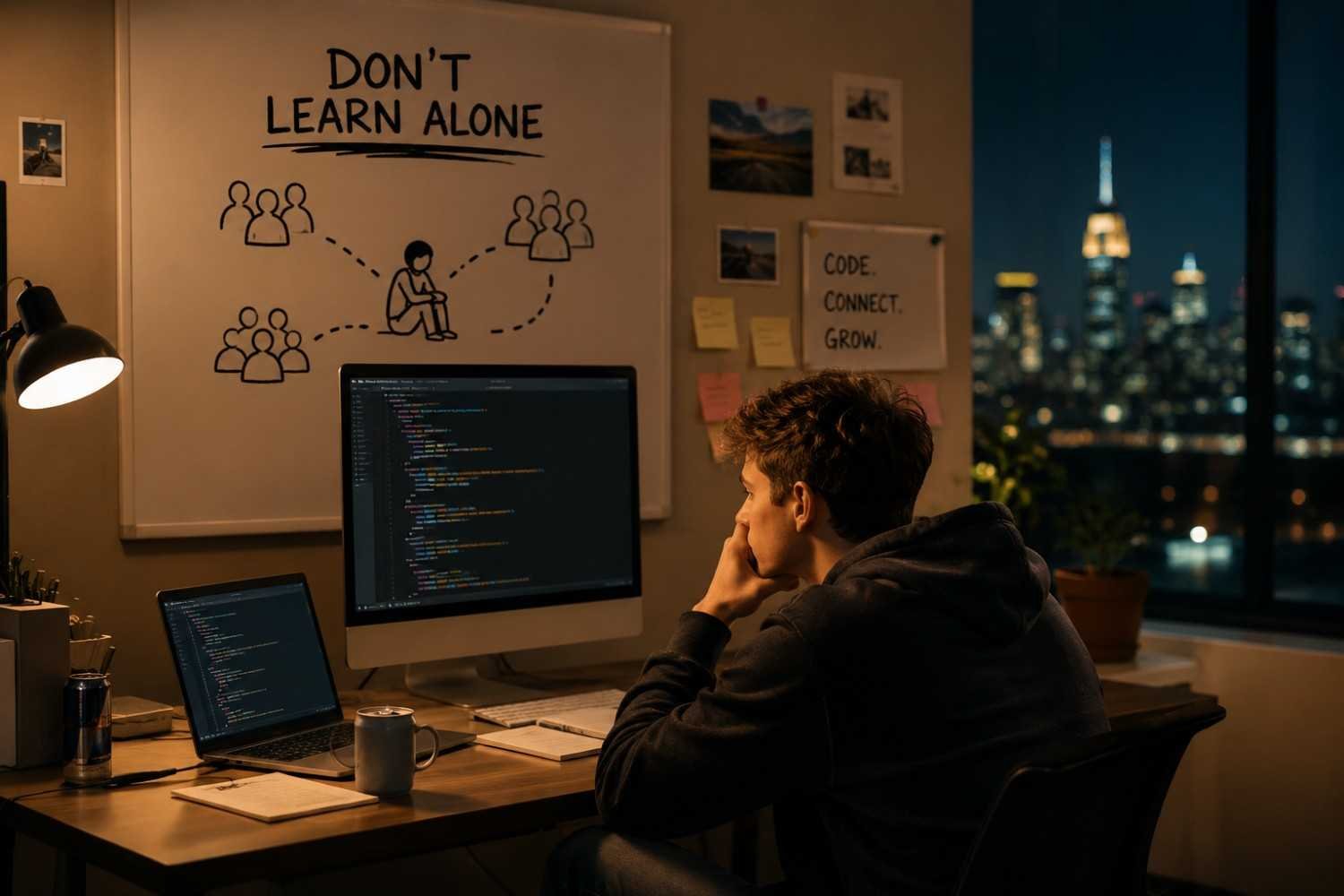
    Don’t Learn Alone

    Don't Learn Alone

    Learning independently doesn’t mean learning in isolation.

    Developer communities, coding groups, and peer discussions expose you to different ways of thinking. Asking thoughtful questions often leads to faster progress than struggling with the same issue for days.

    Sharing projects also builds confidence. Feedback helps you improve your code while preparing you for real-world code reviews and team collaboration.

    At the same time, remember that career growth isn’t only technical. Communication, curiosity, and consistency matter just as much. That’s why continuous learning for programmers becomes a long-term habit instead of a short-term goal. Every project teaches something new, regardless of experience level.

    Build Habits Instead of Chasing Perfection

    Successful developers rarely become successful because they studied longer than everyone else.

    They become successful because they build consistently. Writing code several times a week, reviewing past projects, fixing bugs, and gradually increasing project complexity creates steady improvement.

    Small, repeatable habits outperform occasional bursts of motivation. A simple project completed today contributes more to your growth than another week spent planning the perfect learning roadmap.

    FAQs: Coding Career Mistakes Beginners Make When Building Their Skills

    1. Should I learn multiple programming languages as a beginner?

    It’s usually better to focus on one language until you’re comfortable building projects. A strong foundation makes learning additional languages much easier.

    2. How do I escape tutorial hell?

    Start creating small projects without following every step of a video. Building independently strengthens problem-solving skills and reveals what you truly understand.

    3. Is memorizing syntax necessary?

    No. Understanding programming concepts and knowing how to use documentation are far more valuable than memorizing every command.

    4. How important are Git and GitHub for beginners?

    They’re essential. Version control is widely used in professional software development and helps you manage code while showcasing projects to employers.

    Why Daily Practice Shapes a Better Developer

    Every programmer makes mistakes, especially in the beginning. What separates successful developers isn’t avoiding every mistake but recognizing them early and adjusting their approach. Building projects, strengthening fundamentals, embracing debugging, and staying consistent create skills that last far beyond the latest programming trend.

    A coding career grows one solved problem at a time. Keep building, keep learning, and let steady progress do the heavy lifting.

  • Engineering Mindset Development for Students and Early Career Professionals

    Engineering Mindset Development for Students and Early Career Professionals

    I started noticing something interesting while talking to engineering students and new graduates. The people who stood out weren’t always the ones with the highest grades or the longest list of programming languages. They approached problems differently. Instead of looking for the fastest answer, they were curious enough to ask why the problem existed in the first place.

    I also realized that developing an engineering mindset wasn’t something that happened after earning a degree. It grew through experience, small mistakes, and the willingness to keep improving. The more I observed successful engineers, the clearer it became that their greatest strength wasn’t memorizing formulas. It was learning how to think through challenges from multiple angles.

    What Engineering Mindset Development Really Means

    What Engineering Mindset Development Really Means

    Engineering mindset development goes beyond technical knowledge. It is the ability to approach problems with curiosity, logic, and a willingness to test ideas until a practical solution emerges. While technical skills remain essential, the mindset behind those skills often determines how effectively they are applied.

    A strong engineering mindset combines systematic thinking with creativity. Instead of jumping to conclusions, engineers define the problem, identify constraints, evaluate possible solutions, and refine their ideas based on evidence. This structured approach allows them to tackle everything from software bugs to infrastructure projects with confidence.

    Another important characteristic is systems thinking. Rarely does one decision affect only one component. Every choice can influence cost, performance, usability, sustainability, and long-term maintenance. Seeing those connections helps engineers make smarter decisions throughout a project’s lifecycle.

    Why Technical Knowledge Alone Isn’t Enough

    College courses provide the foundation, but real-world engineering introduces uncertainty that textbooks cannot fully prepare students for.

    Projects often involve limited budgets, changing requirements, unexpected technical challenges, and collaboration with people from different backgrounds. Success depends on adapting to these situations rather than simply recalling information.

    Employers increasingly value engineers who communicate clearly, ask thoughtful questions, and work effectively in teams. Someone who can explain complex technical concepts to non-technical stakeholders often becomes just as valuable as someone with exceptional coding or design skills.

    The ability to keep learning also matters. Technologies, programming languages, manufacturing methods, and industry standards continue evolving. Engineers who stay curious remain relevant throughout their careers instead of relying solely on what they learned in school.

    The Core Habits Behind Engineering Mindset Development

    The Core Habits Behind Engineering Mindset Development

    Building this mindset happens through repeated practice rather than one major breakthrough.

    Follow a Structured Design Process

    Every successful engineering project starts with understanding the problem before searching for solutions. Define the objective, identify constraints, brainstorm possibilities, build prototypes, evaluate results, and improve through multiple iterations.

    This process prevents wasted effort and encourages better decision-making throughout the project.

    Think in Systems Instead of Individual Parts

    Every component interacts with something else.

    A software feature affects user experience. A mechanical design influences manufacturing costs. A material choice impacts durability and sustainability.

    Looking at the bigger picture leads to solutions that perform well beyond their immediate purpose.

    Accept Constraints Instead of Fighting Them

    Engineering rarely happens under perfect conditions.

    Budgets, deadlines, regulations, available materials, and customer expectations all influence design decisions. Rather than viewing constraints as obstacles, experienced engineers treat them as design parameters that encourage smarter solutions.

    Learn by Building, Not Just Reading

    One of the fastest ways to strengthen engineering thinking is through hands-on experience.

    Joining robotics clubs, participating in design competitions, contributing to open-source software, or building personal hardware and software projects exposes students to challenges that classroom exercises cannot fully replicate.

    Working on real projects teaches lessons that are difficult to learn from lectures alone. Unexpected failures, changing requirements, debugging sessions, and teamwork all contribute to stronger problem-solving skills.

    Even small projects can create meaningful learning opportunities. Designing a simple mobile application, automating a repetitive task, building an Arduino project, or creating a personal website all require planning, testing, troubleshooting, and continuous improvement.

    The goal isn’t building something perfect. It’s learning how ideas evolve through experimentation.

    Treat Failure as Valuable Feedback

    Treat Failure as Valuable Feedback

    One of the biggest differences between experienced engineers and beginners is how they respond when something doesn’t work.

    Failed prototypes, unsuccessful experiments, and unexpected bugs are rarely signs of failure. Instead, they provide valuable information about what should change next.

    Every iteration improves understanding.

    Instead of asking, “Why did this fail?” effective engineers often ask, “What did this teach us?”

    This shift in perspective encourages resilience and reduces the fear of making mistakes. Over time, each setback becomes another opportunity to improve both technical skills and decision-making.

    Solve Problems That Have Real Context

    Abstract exercises help build technical foundations, but real-world challenges develop stronger engineering instincts.

    Projects connected to environmental sustainability, healthcare, accessibility, transportation, education, or business operations introduce practical constraints that require balancing multiple priorities.

    These experiences also strengthen communication skills because technical solutions must satisfy users, stakeholders, and project goals rather than simply meeting technical specifications.

    Working with real people often reveals challenges that cannot be predicted during initial planning.

    Reflect After Every Project

    Reflect After Every Project

    Finishing a project should never mark the end of the learning process.

    Take time to evaluate what worked well, what slowed progress, and what could be improved next time.

    Questions such as these encourage continuous improvement:

    • Which decisions produced the best results?
    • What assumptions turned out to be incorrect?
    • Where did communication break down?
    • How could testing have started earlier?
    • Which skills need further development?

    Reflection transforms individual experiences into long-term professional growth.

    Engineering Mindset Development Is a Career-Long Process

    An engineering mindset isn’t something students master before graduation. It continues evolving throughout internships, first jobs, leadership roles, and every project that introduces unfamiliar challenges.

    The engineers who continue growing are usually the ones who remain curious, ask thoughtful questions, collaborate openly, and never assume they already know everything. Technology will continue changing, but the ability to think systematically, adapt quickly, and solve meaningful problems will remain valuable regardless of the tools being used.

    FAQs: Engineering Mindset Development for Students and Early Career Professionals

    1. What is engineering mindset development?

    Engineering mindset development is the process of building structured problem-solving, critical thinking, adaptability, and systems thinking that help engineers solve real-world challenges effectively.

    2. Why is an engineering mindset important for students?

    It prepares students to apply classroom knowledge to practical situations while improving teamwork, communication, and decision-making skills valued by employers.

    3. Can engineering mindset development happen outside the classroom?

    Yes. Personal projects, internships, robotics clubs, hackathons, research opportunities, and open-source contributions all strengthen engineering thinking through practical experience.

    4. How long does it take to develop an engineering mindset?

    It develops gradually through continuous learning, hands-on practice, reflection, and repeated exposure to increasingly complex engineering challenges.

    Why the Way You Think Will Outlast Any Technology

    Programming languages, engineering software, and technical tools will continue changing throughout your career. The professionals who adapt most successfully aren’t necessarily the ones who know every new technology first. They’re the ones who approach problems with curiosity, evaluate evidence carefully, collaborate effectively, and remain willing to improve after every project. Those habits create a foundation that stays valuable regardless of how industries evolve.

    An engineering mindset isn’t built in a semester. It’s built one thoughtful decision, one project, and one lesson at a time.

  • Coding Interview Preparation Roadmap: From Basics to Confident Problem Solver

    Coding Interview Preparation Roadmap: From Basics to Confident Problem Solver

    I used to think the best way to prepare for coding interviews was by solving as many problems as possible. After jumping between random questions for weeks, I realized I was getting better at recognizing specific answers instead of improving my overall problem-solving ability.

    I also noticed that the biggest improvements came once I followed a structured plan. Rather than chasing difficult questions every day, I focused on learning one concept at a time. That steady approach built confidence, reduced frustration, and made technical interviews feel much less intimidating.

    Why a Roadmap Beats Random Practice

    Why a Roadmap Beats Random Practice

    Many candidates spend months solving hundreds of coding questions but still struggle during interviews. The reason is simple. Interviews don’t test how many problems you’ve memorized. They evaluate how you analyze a new challenge, explain your thinking, and arrive at a practical solution.

    A structured coding interview preparation roadmap helps you build skills in the right order. Each concept supports the next one, making advanced topics easier to understand. Instead of constantly feeling stuck, you develop pattern recognition that carries across different question types.

    Progress should also be measured by confidence with concepts, not by the number of completed problems. If you can explain why your solution works, compare its time complexity, and discuss alternatives, you’re moving in the right direction.

    Build Strong Programming Fundamentals First

    Choose one programming language and stick with it throughout your preparation. Whether you prefer Python, Java, or C++, becoming comfortable with syntax, standard libraries, and built-in data structures matters far more than switching languages.

    Before tackling complex interview questions, understand how Big O notation measures time and space complexity. Interviewers often ask why one solution performs better than another, so learning to explain O(N), O(log N), or O(N²) is just as valuable as writing correct code.

    It’s also worth understanding recursion limits, hashing, and how variables behave in memory. These fundamentals make debugging easier and help you write cleaner solutions under pressure.

    Master Data Structures Before Advanced Algorithms

    Master Data Structures Before Advanced Algorithms

    The next stage focuses on recognizing common problem patterns rather than memorizing answers.

    Start with arrays and strings since they appear frequently in technical interviews. Practice traversing arrays, reversing strings, and working with two-dimensional matrices.

    Then move into powerful optimization techniques like the Two Pointers and Sliding Window patterns. These often reduce brute-force solutions into efficient linear-time approaches.

    Linked lists teach careful pointer manipulation, while stacks and queues strengthen your understanding of ordered processing. Spend time learning monotonic stacks because they appear in several medium-level interview questions.

    Rather than solving fifty unrelated problems, spend a week mastering one pattern until recognizing it becomes almost automatic.

    Expand Into Trees, Graphs, and Dynamic Programming

    Once linear data structures feel comfortable, transition into hierarchical structures.

    Binary Trees and Binary Search Trees introduce recursive thinking through preorder, inorder, and postorder traversals. Practice writing both recursive and iterative solutions because interviews may ask for either.

    Heaps become useful when solving top-K element problems, while graphs introduce Breadth-First Search and Depth-First Search for exploring connected data efficiently.

    Backtracking teaches systematic exploration through combinations, subsets, and permutations. Although these problems initially seem difficult, they become manageable after understanding the underlying recursive framework.

    Finally, move into optimization topics like greedy algorithms, interval problems, and dynamic programming. Classic challenges such as Coin Change, Knapsack, and Longest Common Subsequence help develop a deeper understanding of breaking large problems into smaller overlapping subproblems.

    These advanced topics require patience. Focus on understanding why each solution works instead of memorizing code line by line.

    Strengthen Skills Beyond Coding Questions

    Strengthen Skills Beyond Coding Questions

    Strong interview candidates don’t rely on algorithms alone.

    Continue building small applications using Git and GitHub while reviewing object-oriented programming, databases, operating systems, and computer networks. These subjects often appear during technical discussions, especially for entry-level software engineering roles.

    Working on real projects also demonstrates that you can apply programming concepts outside coding platforms. It naturally supports engineering mindset development, because building software involves planning, debugging, collaboration, and continuous improvement rather than simply passing interview questions.

    A balanced preparation strategy makes you a stronger engineer, not just a stronger interview candidate.

    Practice Like You’re Already in the Interview

    The final stage should resemble the interview itself.

    Use a 45-minute timer when solving medium-level problems. Learn to explain your thought process while coding instead of remaining silent. Interviewers often evaluate communication as carefully as they evaluate correctness.

    Before considering a solution complete, test edge cases such as empty inputs, duplicate values, large datasets, and negative numbers. This habit catches mistakes that many candidates overlook.

    Mock interviews are equally valuable. Practicing with peers or interview platforms helps you become comfortable thinking clearly while under pressure. The more realistic your practice sessions become, the less intimidating actual interviews feel.

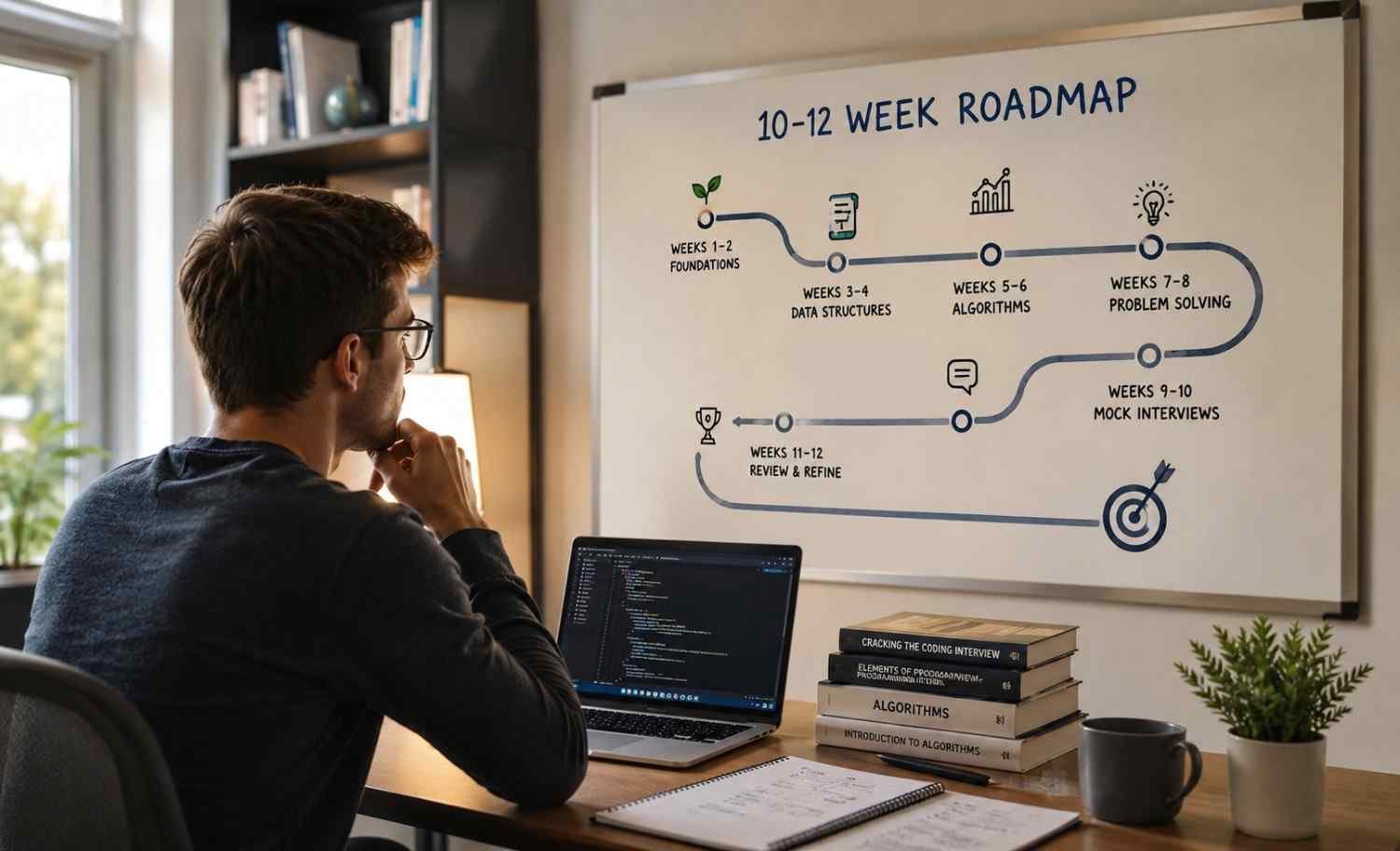
    A Practical 10 to 12 Week Roadmap

    A Practical 10 to 12 Week Roadmap

    The first week should focus on mastering one programming language, reviewing Big O notation, and strengthening core programming fundamentals.

    Weeks two through four should cover arrays, strings, linked lists, stacks, queues, sliding window techniques, and two-pointer patterns.

    Weeks five through seven are ideal for studying trees, heaps, graphs, recursion, and backtracking.

    During weeks eight and nine, dedicate time to greedy algorithms, intervals, and dynamic programming.

    From week ten onward, prioritize timed practice, mock interviews, communication skills, and regular revision. By this stage, your goal shifts from learning new topics to consistently applying everything you’ve practiced.

    FAQs: Coding Interview Preparation Roadmap From Basics to Confident Problem Solver

    1. How long should I prepare for coding interviews?

    A focused 10 to 12-week plan is enough for many candidates if they study consistently and practice regularly.

    2. Should I solve hundreds of coding problems?

    Quality matters more than quantity. Understanding patterns and explaining solutions provides greater long-term benefits than memorizing large numbers of questions.

    3. Which programming language is best for interviews?

    Python, Java, and C++ are all excellent choices. Pick one language and become highly comfortable with its syntax and libraries.

    4. Are mock interviews really necessary?

    Yes. They improve communication, time management, and confidence while exposing weaknesses before real interviews.

    Why Consistency Creates Confident Problem Solvers

    Successful interview preparation isn’t about finding shortcuts or finishing every coding platform. It’s about steadily building a foundation that allows you to recognize patterns, communicate clearly, and solve unfamiliar problems with confidence. Each week of focused practice strengthens skills that extend far beyond technical interviews and into real software development.

    Stay consistent, trust the process, and let steady progress become your greatest advantage.

  • Software Engineering Career Trends in 2026 That Are Reshaping Tech Jobs

    Software Engineering Career Trends in 2026 That Are Reshaping Tech Jobs

    I have followed software engineering long enough to notice that the biggest career shifts rarely happen because a new programming language appears. They usually happen when companies start solving problems differently. Over the past year, I have seen conversations move away from simply learning to code toward learning how to build systems, collaborate with AI, and solve complex business challenges.

    I also noticed that many developers are feeling uncertain about the future. Headlines often suggest AI is replacing programmers, while hiring reports tell a different story. The reality is far more balanced. Companies still need skilled engineers, but they are looking for a different mix of technical expertise, practical thinking, and adaptability than they did just a few years ago.

    Why Software Engineering Is Entering a Different Era

    Why Software Engineering Is Entering a Different Era

    Software engineering has always evolved alongside technology, but 2026 feels different because artificial intelligence has become part of everyday development instead of an experimental tool. AI can now generate boilerplate code, explain unfamiliar frameworks, and automate repetitive tasks within seconds.

    That doesn’t mean software engineers are becoming less valuable. Instead, companies are shifting their expectations. Writing syntax alone is no longer enough because AI can already handle much of that work. Employers now place greater value on engineers who understand software architecture, system design, debugging, scalability, and long-term maintainability.

    The profession is becoming less about producing code quickly and more about making sound engineering decisions that keep applications reliable and secure.

    AI Is Becoming Every Developer’s Teammate

    The biggest misconception surrounding AI is that it replaces software engineers. In reality, it is changing how engineers spend their time.

    Many development teams now rely on AI coding assistants to generate repetitive functions, suggest test cases, or explain unfamiliar documentation. This allows developers to spend more time reviewing architecture, improving application performance, and solving business problems that require human judgment.

    Organizations are also hiring engineers who understand how to integrate large language models into production environments. Building an AI demo is no longer enough. Companies want professionals who can deploy, monitor, fine-tune, and secure AI-powered applications that customers can rely on every day.

    As AI adoption grows, observability, DevSecOps, and secure data pipelines are becoming increasingly valuable because businesses need confidence that AI systems remain accurate, compliant, and reliable after deployment.

    The Barbell Effect Is Changing Hiring

    The Barbell Effect Is Changing Hiring

    One of the most noticeable software engineering career trends in 2026 is the growing gap between entry-level hiring and senior opportunities.

    Companies continue investing heavily in experienced engineers who can lead projects, mentor teams, and design scalable systems. Many senior software engineering positions now offer highly competitive compensation because strategic technical leadership directly affects business growth.

    Meanwhile, entry-level generalist positions have become more competitive. Since AI can automate many routine coding tasks, organizations often expect junior engineers to contribute beyond basic implementation. Problem-solving ability, communication, and understanding how different systems interact have become more important than memorizing syntax alone.

    That doesn’t mean new graduates have fewer opportunities. It simply means employers want candidates who demonstrate practical thinking instead of relying solely on coding exercises.

    This is also where coding career mistakes beginners make become more relevant than ever. Focusing only on tutorials or collecting certificates without building real projects often leaves candidates struggling to stand out in today’s hiring market.

    Skills That Matter More Than Individual Programming Languages

    Programming languages will always remain important, but they are no longer the primary factor separating great engineers from average ones.

    Employers increasingly look for professionals who can:

    • Design scalable systems that support long-term growth.
    • Debug complex production issues efficiently.
    • Work confidently with cloud platforms and automation tools.
    • Communicate technical decisions with cross-functional teams.
    • Learn new technologies without depending on step-by-step tutorials.

    These abilities transfer across different frameworks and make engineers valuable even as technology continues evolving.

    Soft skills are also receiving greater attention. Developers regularly collaborate with product managers, designers, security teams, and AI specialists. Explaining technical concepts clearly has become just as valuable as writing efficient code.

    Career Paths Seeing the Strongest Growth

    Career Paths Seeing the Strongest Growth

    While traditional software development remains strong, several specialized roles continue expanding rapidly.

    AI engineering continues attracting significant investment as businesses integrate intelligent features into existing products. Platform engineering is helping organizations build scalable internal development environments that improve productivity across entire engineering teams.

    Cybersecurity remains another high-growth field because every new digital service introduces additional security challenges. Companies increasingly seek engineers who understand secure software development rather than treating security as an afterthought.

    Cloud engineering, data engineering, and DevOps also continue creating opportunities because modern applications depend on reliable infrastructure, continuous deployment, and efficient data management.

    Global hiring trends are evolving as well. Many organizations are building distributed engineering teams across multiple regions, creating more opportunities for developers who can collaborate effectively in remote environments.

    What Developers Should Focus On Next

    Trying to predict every new technology rarely leads to long-term career success. Instead, focus on building strong engineering fundamentals that remain valuable regardless of industry trends.

    Continue improving your understanding of algorithms, databases, networking, and software architecture while learning how AI fits into modern development workflows. Build projects that solve real problems instead of simply following tutorials from beginning to end.

    The developers who thrive in 2026 will not necessarily know every framework. They will be the ones who can learn quickly, think critically, and adapt as technology changes.

    FAQs: Software Engineering Career Trends in 2026 That Are Reshaping Tech Jobs

    1. Is AI replacing software engineers in 2026?

    No. AI is automating repetitive coding tasks, but companies still need engineers to design systems, solve complex problems, review AI-generated code, and make strategic technical decisions.

    2. Which software engineering roles have the strongest demand?

    AI engineering, cloud engineering, cybersecurity, DevOps, platform engineering, and data engineering continue showing strong hiring demand because businesses rely on scalable and secure digital infrastructure.

    3. Should beginners still pursue software engineering?

    Yes. The field remains full of opportunities, but beginners should focus on practical projects, problem-solving, communication skills, and strong engineering fundamentals instead of only learning programming syntax.

    4. What is the most valuable skill for software engineers in 2026?

    Adaptability is one of the most valuable skills. Engineers who continuously learn, understand system design, and work effectively with AI tools are better positioned for long-term career growth.

    Why Adaptability Will Always Be Your Biggest Advantage

    Technology will continue changing, just as it always has. Frameworks, programming languages, and AI tools will evolve, but the ability to understand complex systems, solve meaningful problems, and keep learning will remain valuable regardless of what comes next. Engineers who embrace change instead of fearing it are the ones who consistently build rewarding careers.

    The future belongs less to those who know everything today and more to those willing to keep learning tomorrow.