
I remember thinking that learning to code meant collecting as many programming languages and frameworks as possible. Every new tutorial looked like the missing piece, so I kept jumping between topics. Instead of feeling more confident, I found myself forgetting what I had learned just a few weeks earlier.
I also noticed that my biggest breakthroughs never came from watching another course. They happened when I struggled through bugs, built small projects, and accepted that feeling stuck was part of learning. Looking back, most beginner mistakes weren’t about intelligence. They were about approaching the learning process the wrong way.
Why Most Beginners Struggle More Than They Need To

Starting a coding career can feel overwhelming because there’s always another language, framework, or trend to explore. Social media and online communities make it seem like successful developers know everything, but that’s rarely true.
The strongest programmers usually have a solid foundation rather than a long list of technologies. They understand how to solve problems, debug issues, and keep learning as the industry evolves. Beginners who focus on these skills often progress faster than those chasing every new trend.
Trying to Learn Everything at Once
One of the biggest coding career mistakes beginners make is believing they should master multiple programming languages at the same time.
Learning Python today, JavaScript tomorrow, and Rust next week spreads your attention too thin. Each language has its own syntax, ecosystem, and best practices. Constantly switching makes it harder to develop confidence in any of them.
Instead, choose one language that matches your goals. If you’re interested in web development, JavaScript is a practical starting point. If data analysis or automation interests you, Python is an excellent option. Build a strong foundation before expanding your skill set.
Depth almost always creates better career opportunities than constantly starting over.
Watching Tutorials Without Building Anything

Tutorials are valuable, but they shouldn’t become your primary learning method.
Many beginners spend months following step-by-step videos without creating anything independently. This habit, often called tutorial hell, creates the illusion of progress while limiting real problem-solving experience.
After finishing a lesson, close the video and build something similar on your own. It doesn’t have to be impressive. A calculator, weather app, expense tracker, or simple to-do list teaches far more than replaying another course.
Another common challenge appears when beginners open a blank editor and have no idea where to begin. That uncertainty is completely normal. The solution isn’t another tutorial. It’s breaking the project into smaller pieces and writing one function at a time.
Every independent project improves confidence because it forces you to think instead of copy.
Memorizing Code Instead of Learning How to Solve Problems
Programming isn’t a memory competition.
Experienced developers regularly use documentation, search official references, and review existing code. They don’t memorize every function or syntax rule because they don’t need to.
Focus on understanding why code works rather than remembering every character. Learn how variables interact, how loops behave, and how functions solve specific problems.
When you understand the logic, finding the correct syntax becomes much easier.
Reading documentation is another skill worth developing early. Official documentation often explains features more accurately than random online examples and helps you become a more independent developer.
Skipping the Fundamentals

Advanced topics like artificial intelligence, cloud computing, and cybersecurity are exciting, but rushing toward them too early creates unnecessary gaps.
Programming fundamentals remain the backbone of software development. Variables, functions, object-oriented programming, debugging, data structures, algorithms, and version control appear in almost every development role.
Ignoring these concepts usually makes advanced technologies feel much harder than they should.
Git and GitHub deserve special attention as well. Learning version control early helps you manage projects, track changes, and collaborate with other developers, all of which are expected in professional environments.
Treat Errors Like Helpful Feedback
Few things frustrate beginners more than seeing red error messages fill the screen.
It’s easy to think an error means failure, but experienced developers see it differently. Every error contains information that points toward the next step.
Instead of immediately searching for the exact solution, read the message carefully. Check line numbers, variable names, and function calls before making changes.
Developing debugging skills saves countless hours throughout a coding career because finding problems efficiently is just as valuable as writing new features.
Don’t Learn Alone
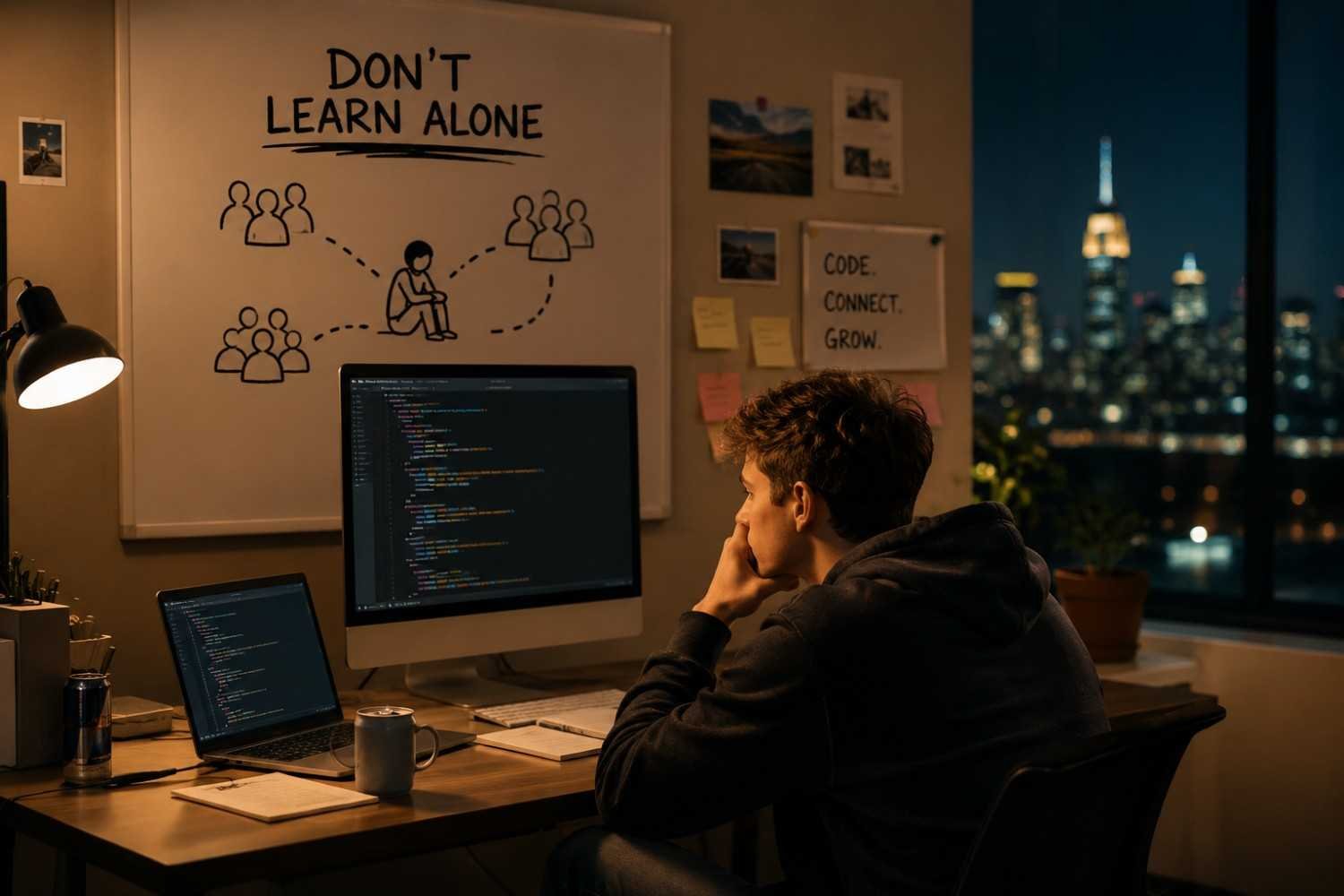
Learning independently doesn’t mean learning in isolation.
Developer communities, coding groups, and peer discussions expose you to different ways of thinking. Asking thoughtful questions often leads to faster progress than struggling with the same issue for days.
Sharing projects also builds confidence. Feedback helps you improve your code while preparing you for real-world code reviews and team collaboration.
At the same time, remember that career growth isn’t only technical. Communication, curiosity, and consistency matter just as much. That’s why continuous learning for programmers becomes a long-term habit instead of a short-term goal. Every project teaches something new, regardless of experience level.
Build Habits Instead of Chasing Perfection
Successful developers rarely become successful because they studied longer than everyone else.
They become successful because they build consistently. Writing code several times a week, reviewing past projects, fixing bugs, and gradually increasing project complexity creates steady improvement.
Small, repeatable habits outperform occasional bursts of motivation. A simple project completed today contributes more to your growth than another week spent planning the perfect learning roadmap.
FAQs: Coding Career Mistakes Beginners Make When Building Their Skills
1. Should I learn multiple programming languages as a beginner?
It’s usually better to focus on one language until you’re comfortable building projects. A strong foundation makes learning additional languages much easier.
2. How do I escape tutorial hell?
Start creating small projects without following every step of a video. Building independently strengthens problem-solving skills and reveals what you truly understand.
3. Is memorizing syntax necessary?
No. Understanding programming concepts and knowing how to use documentation are far more valuable than memorizing every command.
4. How important are Git and GitHub for beginners?
They’re essential. Version control is widely used in professional software development and helps you manage code while showcasing projects to employers.
Why Daily Practice Shapes a Better Developer
Every programmer makes mistakes, especially in the beginning. What separates successful developers isn’t avoiding every mistake but recognizing them early and adjusting their approach. Building projects, strengthening fundamentals, embracing debugging, and staying consistent create skills that last far beyond the latest programming trend.
A coding career grows one solved problem at a time. Keep building, keep learning, and let steady progress do the heavy lifting.
Leave a Reply