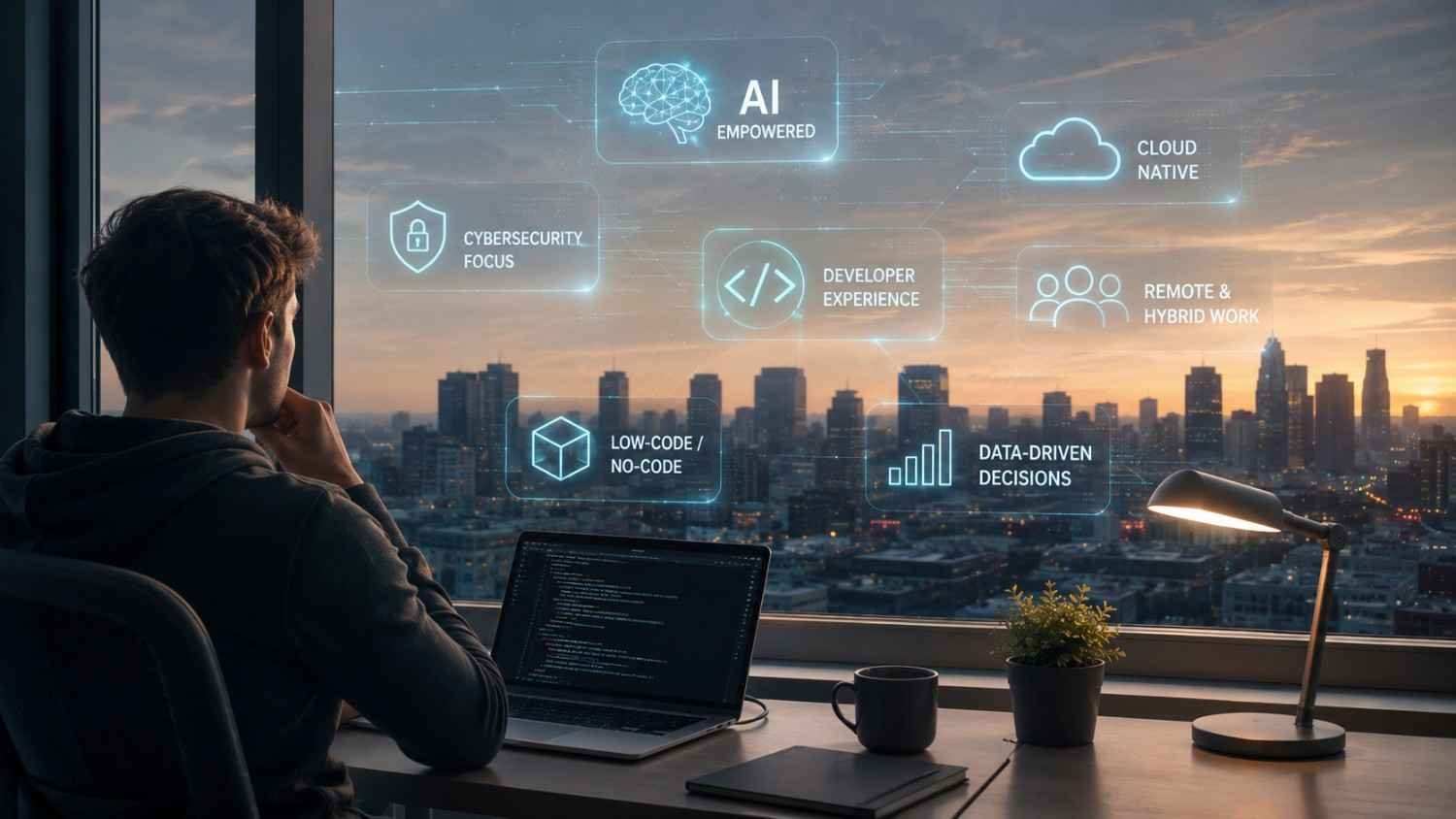
I have followed software engineering long enough to notice that the biggest career shifts rarely happen because a new programming language appears. They usually happen when companies start solving problems differently. Over the past year, I have seen conversations move away from simply learning to code toward learning how to build systems, collaborate with AI, and solve complex business challenges.
I also noticed that many developers are feeling uncertain about the future. Headlines often suggest AI is replacing programmers, while hiring reports tell a different story. The reality is far more balanced. Companies still need skilled engineers, but they are looking for a different mix of technical expertise, practical thinking, and adaptability than they did just a few years ago.
Why Software Engineering Is Entering a Different Era

Software engineering has always evolved alongside technology, but 2026 feels different because artificial intelligence has become part of everyday development instead of an experimental tool. AI can now generate boilerplate code, explain unfamiliar frameworks, and automate repetitive tasks within seconds.
That doesn’t mean software engineers are becoming less valuable. Instead, companies are shifting their expectations. Writing syntax alone is no longer enough because AI can already handle much of that work. Employers now place greater value on engineers who understand software architecture, system design, debugging, scalability, and long-term maintainability.
The profession is becoming less about producing code quickly and more about making sound engineering decisions that keep applications reliable and secure.
AI Is Becoming Every Developer’s Teammate
The biggest misconception surrounding AI is that it replaces software engineers. In reality, it is changing how engineers spend their time.
Many development teams now rely on AI coding assistants to generate repetitive functions, suggest test cases, or explain unfamiliar documentation. This allows developers to spend more time reviewing architecture, improving application performance, and solving business problems that require human judgment.
Organizations are also hiring engineers who understand how to integrate large language models into production environments. Building an AI demo is no longer enough. Companies want professionals who can deploy, monitor, fine-tune, and secure AI-powered applications that customers can rely on every day.
As AI adoption grows, observability, DevSecOps, and secure data pipelines are becoming increasingly valuable because businesses need confidence that AI systems remain accurate, compliant, and reliable after deployment.
The Barbell Effect Is Changing Hiring

One of the most noticeable software engineering career trends in 2026 is the growing gap between entry-level hiring and senior opportunities.
Companies continue investing heavily in experienced engineers who can lead projects, mentor teams, and design scalable systems. Many senior software engineering positions now offer highly competitive compensation because strategic technical leadership directly affects business growth.
Meanwhile, entry-level generalist positions have become more competitive. Since AI can automate many routine coding tasks, organizations often expect junior engineers to contribute beyond basic implementation. Problem-solving ability, communication, and understanding how different systems interact have become more important than memorizing syntax alone.
That doesn’t mean new graduates have fewer opportunities. It simply means employers want candidates who demonstrate practical thinking instead of relying solely on coding exercises.
This is also where coding career mistakes beginners make become more relevant than ever. Focusing only on tutorials or collecting certificates without building real projects often leaves candidates struggling to stand out in today’s hiring market.
Skills That Matter More Than Individual Programming Languages
Programming languages will always remain important, but they are no longer the primary factor separating great engineers from average ones.
Employers increasingly look for professionals who can:
- Design scalable systems that support long-term growth.
- Debug complex production issues efficiently.
- Work confidently with cloud platforms and automation tools.
- Communicate technical decisions with cross-functional teams.
- Learn new technologies without depending on step-by-step tutorials.
These abilities transfer across different frameworks and make engineers valuable even as technology continues evolving.
Soft skills are also receiving greater attention. Developers regularly collaborate with product managers, designers, security teams, and AI specialists. Explaining technical concepts clearly has become just as valuable as writing efficient code.
Career Paths Seeing the Strongest Growth

While traditional software development remains strong, several specialized roles continue expanding rapidly.
AI engineering continues attracting significant investment as businesses integrate intelligent features into existing products. Platform engineering is helping organizations build scalable internal development environments that improve productivity across entire engineering teams.
Cybersecurity remains another high-growth field because every new digital service introduces additional security challenges. Companies increasingly seek engineers who understand secure software development rather than treating security as an afterthought.
Cloud engineering, data engineering, and DevOps also continue creating opportunities because modern applications depend on reliable infrastructure, continuous deployment, and efficient data management.
Global hiring trends are evolving as well. Many organizations are building distributed engineering teams across multiple regions, creating more opportunities for developers who can collaborate effectively in remote environments.
What Developers Should Focus On Next
Trying to predict every new technology rarely leads to long-term career success. Instead, focus on building strong engineering fundamentals that remain valuable regardless of industry trends.
Continue improving your understanding of algorithms, databases, networking, and software architecture while learning how AI fits into modern development workflows. Build projects that solve real problems instead of simply following tutorials from beginning to end.
The developers who thrive in 2026 will not necessarily know every framework. They will be the ones who can learn quickly, think critically, and adapt as technology changes.
FAQs: Software Engineering Career Trends in 2026 That Are Reshaping Tech Jobs
1. Is AI replacing software engineers in 2026?
No. AI is automating repetitive coding tasks, but companies still need engineers to design systems, solve complex problems, review AI-generated code, and make strategic technical decisions.
2. Which software engineering roles have the strongest demand?
AI engineering, cloud engineering, cybersecurity, DevOps, platform engineering, and data engineering continue showing strong hiring demand because businesses rely on scalable and secure digital infrastructure.
3. Should beginners still pursue software engineering?
Yes. The field remains full of opportunities, but beginners should focus on practical projects, problem-solving, communication skills, and strong engineering fundamentals instead of only learning programming syntax.
4. What is the most valuable skill for software engineers in 2026?
Adaptability is one of the most valuable skills. Engineers who continuously learn, understand system design, and work effectively with AI tools are better positioned for long-term career growth.
Why Adaptability Will Always Be Your Biggest Advantage
Technology will continue changing, just as it always has. Frameworks, programming languages, and AI tools will evolve, but the ability to understand complex systems, solve meaningful problems, and keep learning will remain valuable regardless of what comes next. Engineers who embrace change instead of fearing it are the ones who consistently build rewarding careers.
The future belongs less to those who know everything today and more to those willing to keep learning tomorrow.
Leave a Reply